TronXYZ showcases new glasses Free 3D Technology
TronXYZ showcases new glasses Free 3D Technology
The Glasses Free 3D Technology is Here
MOUNTAIN VIEW, Calif., Oct. 17, 2018/PRNewswire/ -- For nearly 100 years, 3D movies have always needed 3D glasses to be worn along with specific seating placement. TronXYZ has now developed the technology to make 3D entertainment glasses-free.
The basic idea behind how the technology works is simple: instead of a purely flat screen, TronXYZ uses a special optical device laminated on the top of the regular screen to control the light directions from the pixels on the screen so that both eyes can see different pixels. Essentially one eye sees a different picture than the other eye; this is how we currently view the real world.
The benefits to this new technology compared to the old style allow for a much more robust viewing experience. With the current design, structure, and materials, there is no loss of brightness. Historically there are other glasses-free 3D solutions, however, the user will experience a 70% brightness loss. The second issue with the old glasses-free 3D technology is that the viewer must remain in the 3D "sweet-spot." TronXYZ's technology makes it possible for the viewer to be in a large spectrum of viewing positions, distances, and angles without any drop in quality. Finally, the technology is not limited to keeping a device in only landscape mode, but also watching glasses-free 3D content in portrait mode.
Sub-Pixel Rendering and Eye Tracking Technology
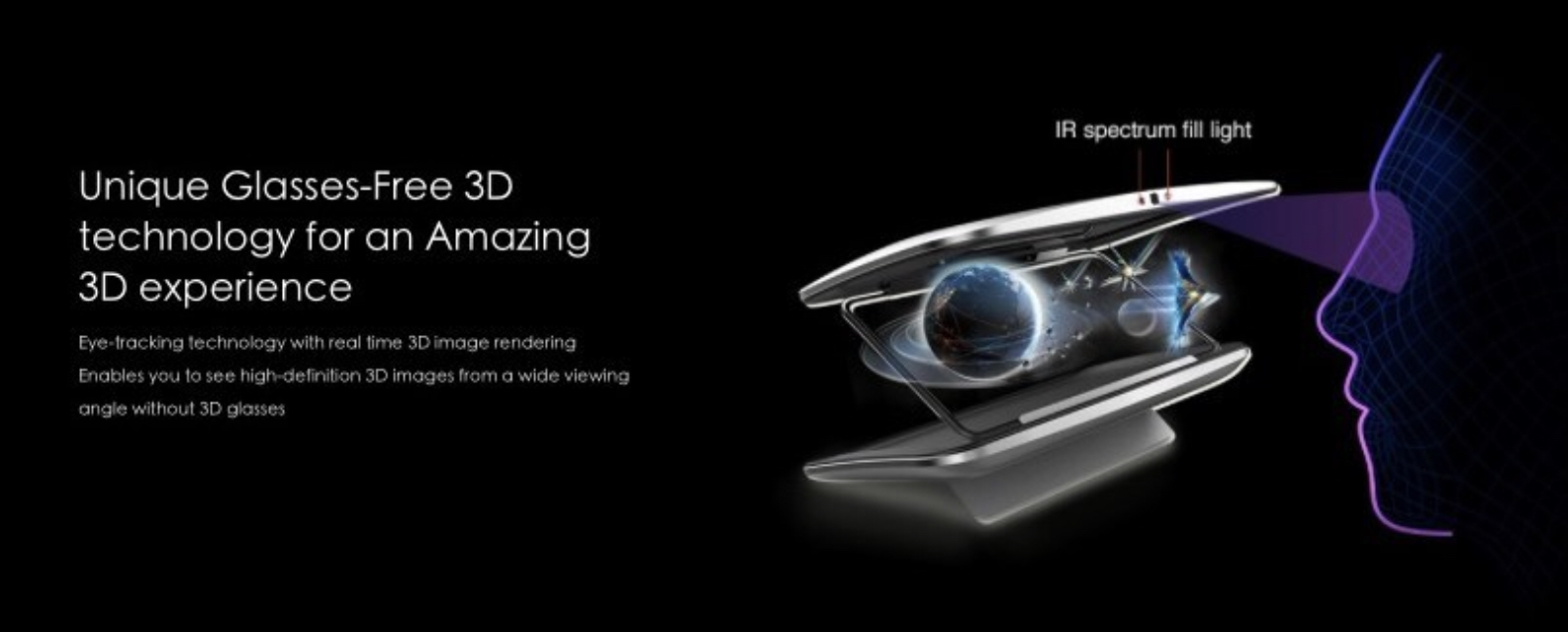
Besides the device's specially designed display screen for large viewing angles, TronXYZ has also developed innovative sub-pixel rendering technology, which means every pixel can be rendered according to the operator's viewing angle, distance, and position. When 3D content is detected, the eye tracking engine inside the device tracks where a person is viewing the screen and passes that information to the sub-pixel rendering engine to make sure every pixel displayed is optimal.
With TronXYZ's 3D technology, you no longer have to hold your phone at a certain angle to be comfortable. Eye tracking technology allows you to be flexible on what angle or position you want to view your 3D content in.
Future of 3D
TronXYZ's current 3D viewing technology is already years ahead of what was thought possible; the future only seems to hold the brightest and the highest definition viewing experiences. 3D technology will be useful in the medical field, keep industrial applications safe, be popular in the education industry, and create the next blockbuster hits.
Source: TronXYZ