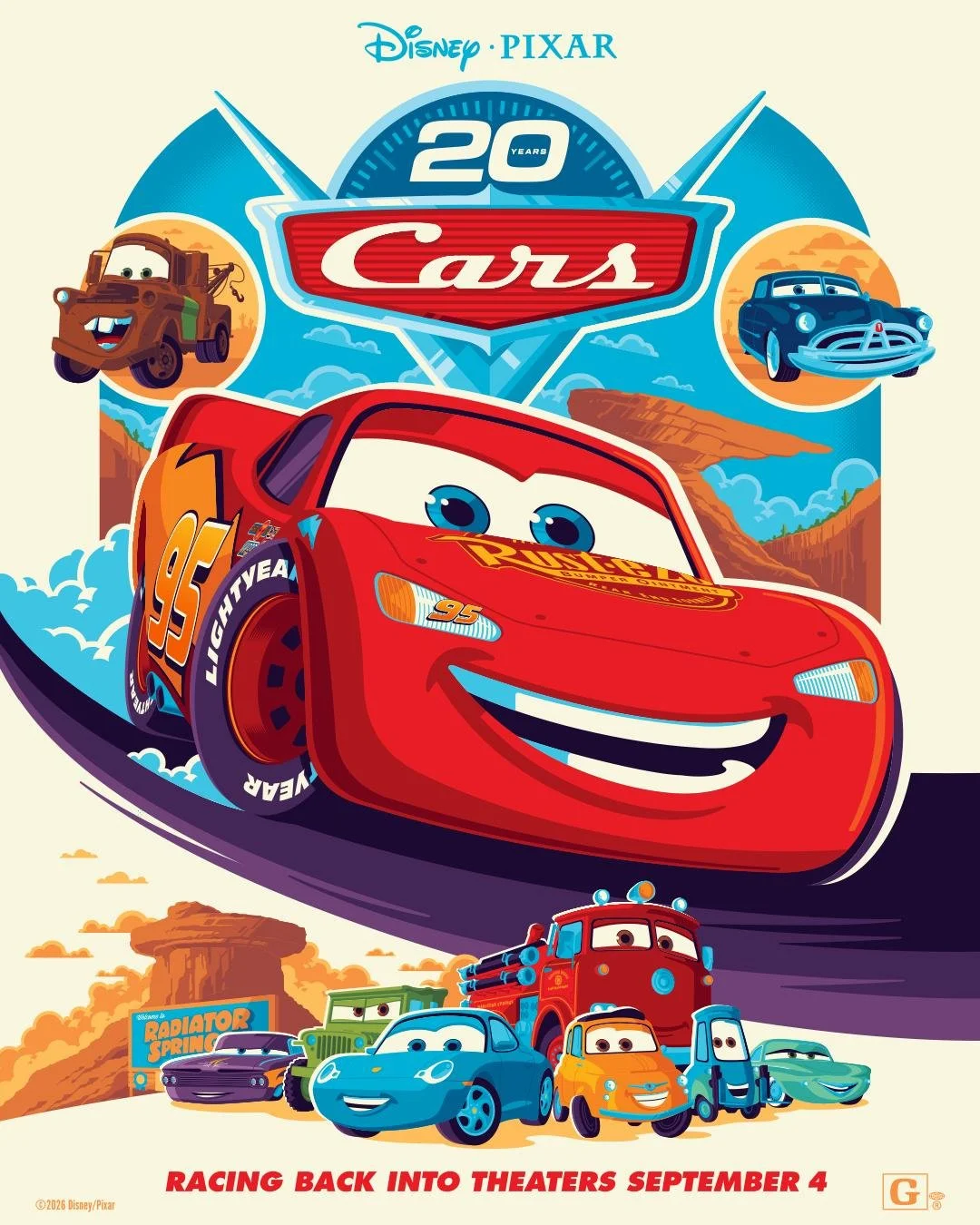
Cars (20th Anniversary) 3D Movie Review

Cars (20th Anniversary)

3D Movie Review

Written By: Jacob Scarberry

3D

“3D... I... am 3D!”

The post-summer season is always a slowdown at the box office, with the last of the blockbusters gradually slowing down before hitting home video, and horror films about to gear up to start their reign for the season. Studios need some counter-programming to get families back in the theaters to eke out a few extra bucks. Better yet, it helps that the film is a classic with an anniversary, and even better, a 3D version to make even more money. Presto! You have the twentieth anniversary of this everlasting classic for families.

Pixar is rather notorious for their 3D presentations, being rather mild and inoffensive, and that trend continues here with Cars in 3D. Created for a 3D Blu-ray re-release in 2013, this is the same version from 13 years ago, and it focuses more on depth than on the “Ka-Chow!” factors like pop-ins and pop-outs. The depth is always impressive throughout, with the vast vistas of the American (Carmerican?) Southwest, the racing scenes, and the many shots of Radiator Springs from car level being beautiful. The few bits of random pop-outs (the fireworks scene is the best demo for pop-outs) are fantastic as well. You almost can't tell this wasn't a native 3D film, but for what it is, this image still holds up rather well.

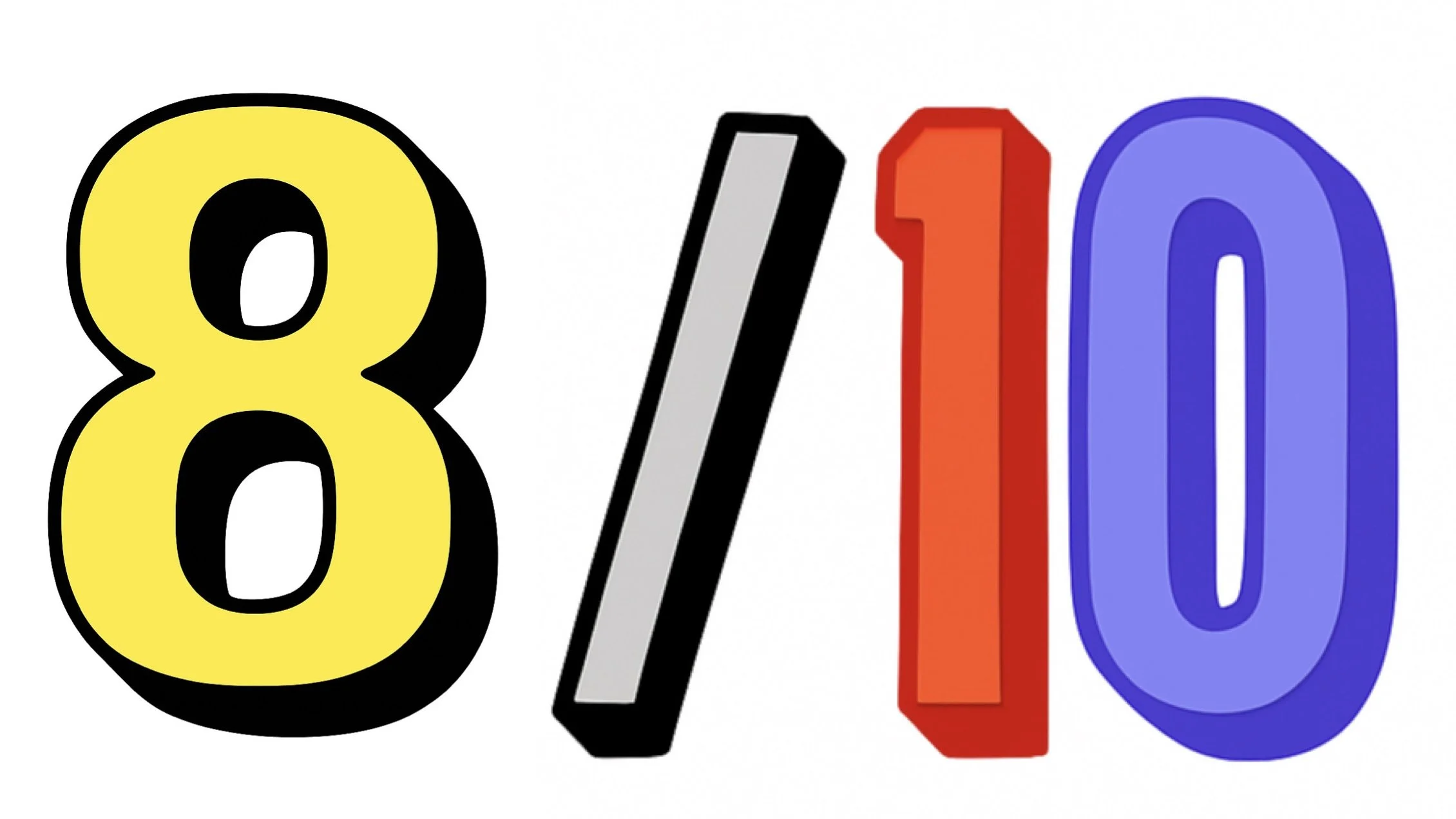
Final 3D Score: 8/10

Movie

Pixar, from 1995 to 2006, had one of the best runs for any studio ever. Toy Story 1 & 2. Monsters, Inc. Finding Nemo. The Incredibles. Even their “worst” film, A Bug's Life, was a beloved animated classic by the time their next film was about to release. I love them all, and by summer 2006, I was totally ready for their next project, Cars, to be unleashed into the world.

The film was a box-office hit, grossing over $400 million worldwide, with a further $250 million in DVD and Blu-ray sales later that year, and I was excited to finally see the film when I rented it from Blockbuster to eagerly watch their next magnum opus. For 117 minutes, I watched anthropomorphic vehicles recreate Doc Hollywood, and that's when it hit me.

Disappointment... Massive disappointment.

Lightning McQueen (Owen Wilson) is the hot, young rookie racer on the circuit, eagerly awaiting to be the first rookie ever to win the coveted Piston Cup. While thinking he has the race in the bag, sure enough, he blows his tires on the final corner and manages to make a three-way tie with the beloved racing elder “The King” (NASCAR legend Richard Petty) and cocksure pro Chick Hicks (Michael Keaton). While the trio have to race again in Los Angeles the following week, Lightning is ready to make history, until his truck driver Mack (Pixar good-luck charm John Ratzenberger) is forced by McQueen to drive all night to make it to LA. A group of street racers distract a snoozing Mack, allowing Mr. Ka-Chow himself to escape from the trailer. McQueen desperately tries to find his way back to the interstate, but inevitably causes chaos and damage in the sleepy Route 66 town of Radiator Springs and is arrested and ordered by the town judge/doctor/old sage, Doc Hudson (the legendary Paul Newman in his final performance), to repair the road he damaged. From there, we go through the Doc Hollywood retread of a fast-moving guy learning to slow down and enjoy life that doesn't involve a pile of money, and becoming a better car along the way.

So what made me disappointed with Cars? I enjoy the 1991 film Doc Hollywood, with its breezy charm led by Michael J. Fox making it a regular watch on TBS, so what's different with Cars?

If you've never seen Doc Hollywood, here's my criticism of Cars on its own merits: the story is incredibly familiar. A hotshot young guy gets stranded in a small town, is forced to slow down, meets some colorful locals, falls in love, learns that life is about more than money and success, and eventually becomes a better person (or car, in this case). There's nothing inherently wrong with that story, but Cars doesn't do quite enough with it to make it feel particularly fresh or meaningful. There are moments of genuine emotion, especially with Doc Hudson and the history of Route 66, but most of the story stays pretty surface-level. The animation is gorgeous, the characters are likable, and the movie is perfectly enjoyable, but when the credits rolled, I couldn't help but feel like there should have been a little more there.

I think it's because the film is very slight for the most part. It doesn't really tackle emotional or adult themes like their other films, or offer the clever storytelling of their other offerings, giving us a rather easy watch. I mean, that's fine, but I was expecting more, especially after the brilliance of The Incredibles delivered in 2004. Cars does have some scenes of emotional weight, with Lightning discovering Doc's racing past, the loneliness of Lightning McQueen, and the effects of interstates on the legendary Route 66. But other than that, it's rather surface-level.

The film screams more of a toyetic film than what Pixar had released before, and yes, there was merchandise from the previous films, but Cars merchandise was and still is clogging up toy store walls. But can you blame Disney? Cars is Pixar's most profitable franchise, with billions of dollars earned from the merchandise, and profit reigns supreme. However, that doesn't excuse the fact that the film just isn't amazing.

2006 was a rather notorious year in animated film, with not a lot to offer (Ice Age 2, Happy Feet, Open Season, The Ant Bully, Barnyard, Doogal, Curious George, Everyone's Hero, Happily N'ever After, Over the Hedge, Flushed Away, and The Wild being the big ones that year, with my favorite being Monster House), so Cars was bound to be one that people flocked to.

What does Cars offer, then?

Starting off with the usual fantastic animation from the artists over at Pixar, lovingly detailing the world with the right amount of cartoon and photorealism that delights and amazes, even two decades later. The lighting and effects work are still amazing, especially later in the film when the neons are a-glow, and it just makes me yearn for cruising culture to make a comeback.

The voice cast does well, with not only the aforementioned cast, but we also get great work from George Carlin, Bonnie Hunt, and Larry the Cable Guy in his best role, Mater the Tow Truck, which isn't much of a stretch from Dan Whitney's comic persona, but he's just so darn likable as the rusted tow truck.

So the film is more kid-centric than other films in Pixar's oeuvre, and there are some moments of greatness throughout that make it a bit more interesting, but it just lacked the je ne sais quoi to make it better in my eyes. Yes, the technical aspects are fantastic, the cast are having a great time here, and there are some fun bits of adult humor thrown in from time to time, but I guess I was just ten years too old in 2006 to really enjoy it then, and thirty years too old now in 2026 to really enjoy it now.

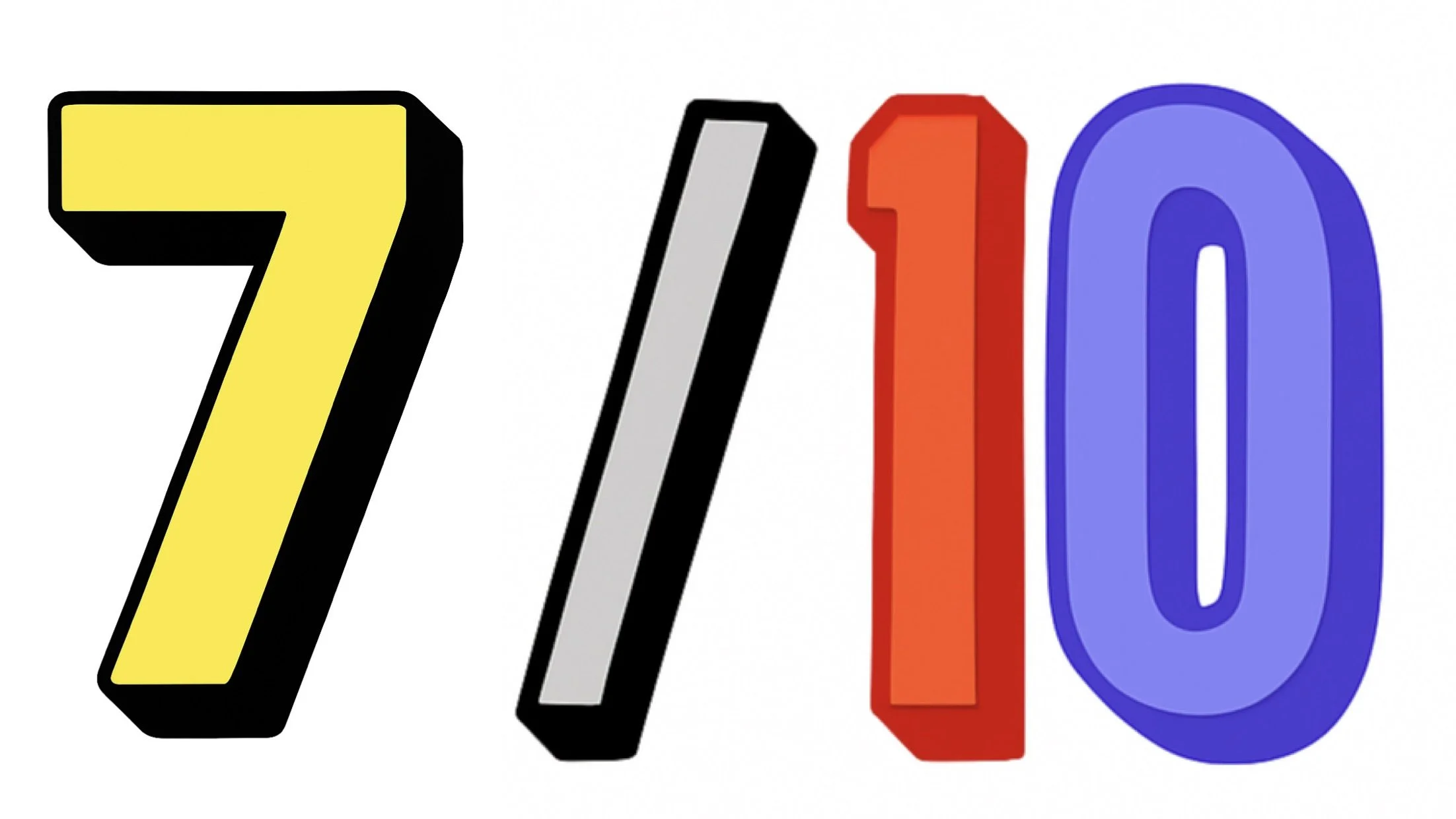
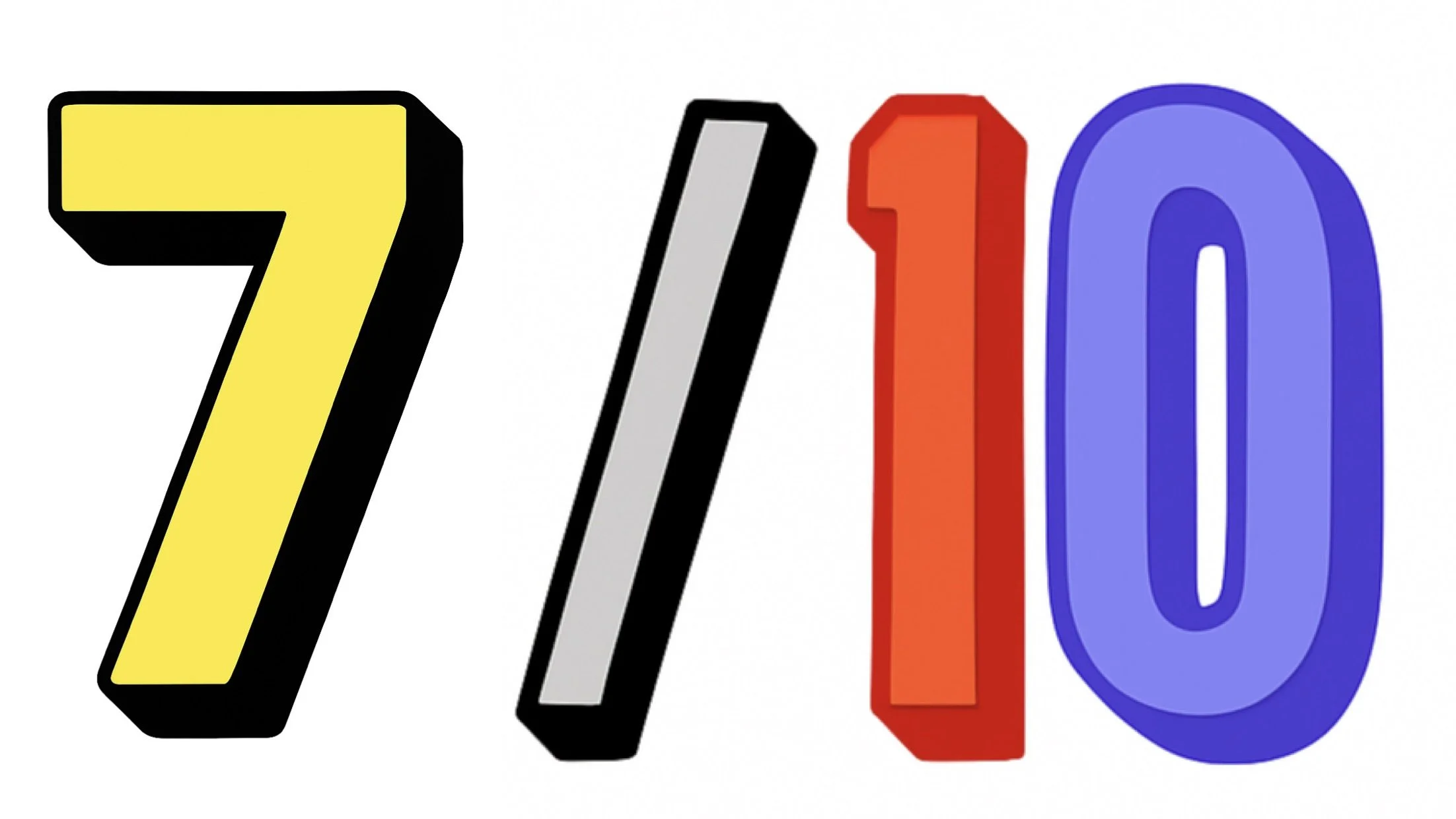
Final Movie Score: 7/10
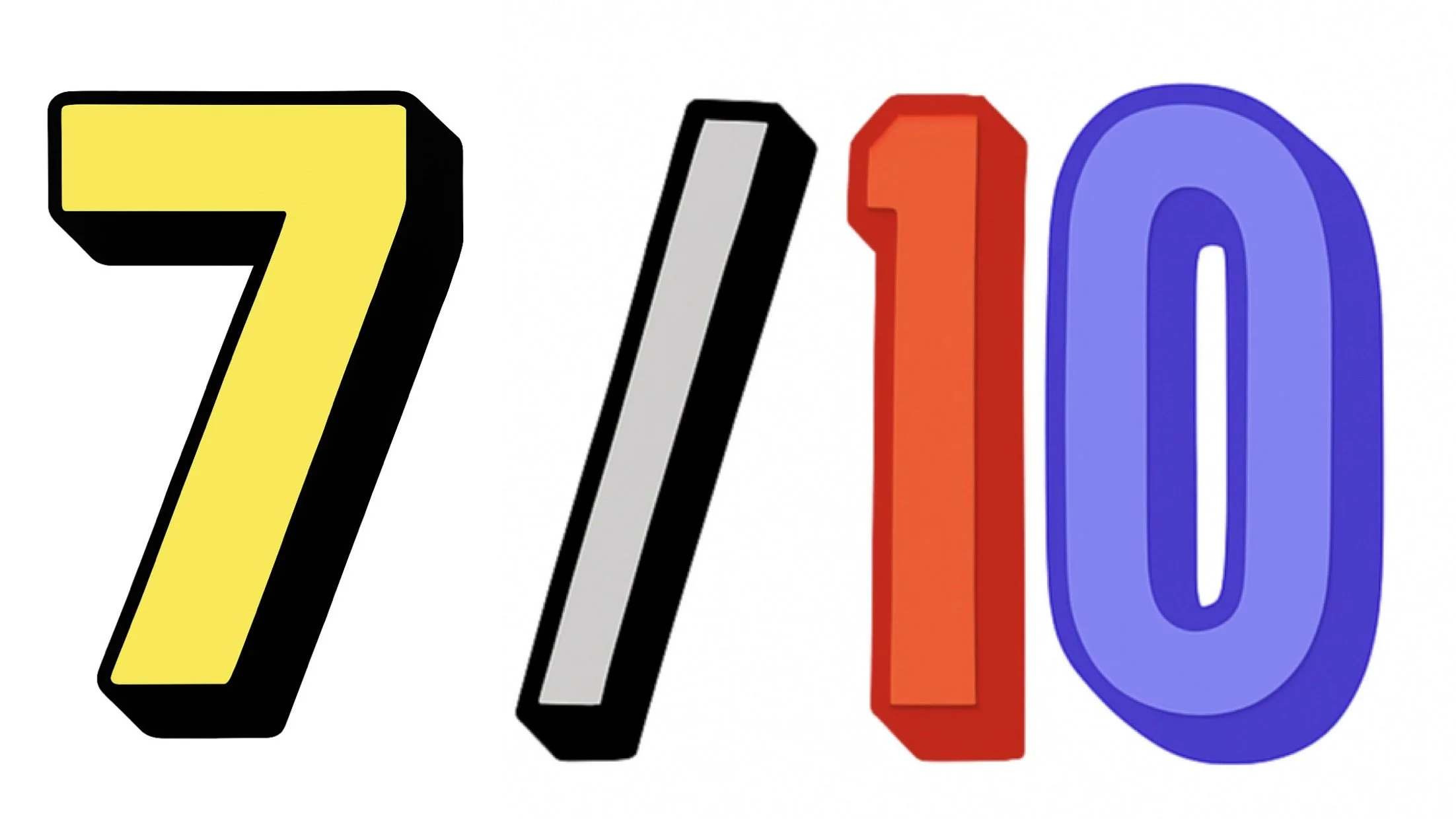


Learn more about how we rate 3D content via the link below:

https://www.3dor2d.com/3d-or-2d-ratingssystem/


Official Website:

https://movies.disney.com/cars

© 2026 Disney and its related entities


Moana 2026 3D Movie Review

Moana (2026)

3D Movie Review

Written By:Adolph Vega


3D

I watched Moana (2026) in RealD 3D on a laser projector, and visually it’s a beautiful presentation. The bright tropical environments absolutely thrive in 3D, creating a vibrant image that feels rich and inviting from beginning to end.

There are plenty of fun moments where objects fly off the screen. Spears, oars, flames, splashing water, and other effects constantly reach into the audience, giving the presentation an energetic feel. The underwater sequences are especially gorgeous, often looking like animated screen savers filled with colorful sea life.

The environments benefit the most from the extra dimension. Jungles, tree limbs, and villages all gain convincing layers that make you feel like you’re standing inside the world rather than simply watching it. Even the end credits feature some surprisingly attractive 3D imagery.

Ironically, my biggest disappointment was the ocean itself. I expected the endless open water to deliver incredible depth, but many of those sweeping shots felt surprisingly flat. A handful of darker scenes also reduce the overall impact, although the 3D remains solid even during those moments.

My favorite 3D sequence is “You’re Welcome,” which makes excellent use of layered imagery and depth throughout the musical number.

While I wish the characters themselves had been given more dimensionality (more on that later), Moana (2026) is still an attractive and consistently enjoyable 3D presentation.

Final 3D Score: 8/10


Movie

Disney’s live-action Moana follows the exact same story audiences fell in love with nearly ten years ago—to a fault.

As her island begins to struggle, Moana sets out to find a solution, eventually teaming up with the demigod Maui on a magical journey to restore balance to the world.

The biggest problem with this movie isn’t the story—it’s the performances. Nearly every actor feels restrained, bringing very little personality or energy to their character. “Flat” is the perfect word to describe the acting. These aren’t three-dimensional characters. They aren’t even two-dimensional. Most of them feel one-dimensional, with little personality or meaningful character development.

Heihei, the chicken sidekick, has a larger role here. I understand the character is meant to entertain younger audiences, but I found the added screen time more tedious than funny. Moana’s parents are present throughout the film, yet they leave almost no impression. Even Dwayne Johnson, who brought so much charisma to Maui in the animated version, feels like he’s running on autopilot. For a story filled with larger-than-life personalities, everyone feels oddly muted. I kept wishing the cast would simply be more animated.

One scene before the song “Shiny” especially stood out to me. Maui tells Moana to be “more shiny,” and I couldn’t help but think that’s exactly what this movie needed. It almost felt like a fourth-wall break. Nearly every performance lacks the charisma and emotional weight needed to make these characters pop. Because of that, it’s difficult to become invested in anyone, and the movie ultimately becomes a chore to watch.

The live-action remake is about 95% identical to the animated original, yet somehow it loses much of the heart that made that film so memorable. Despite following the same story beat for beat, this version feels slower, flatter, and emotionally distant.

Before the movie started, there was a commercial for Pepsi’s Starry with the slogan, “It hits different.” Oddly enough, that phrase perfectly describes this movie. It definitely hits different—but not in a good way.

Disney doesn’t do this remake any favors by recreating the original so closely. With both films telling virtually the same story, the inevitable question becomes: why remake it at all? Unlike Will Smith’s Genie in Aladdin, which intentionally offered a fresh interpretation instead of imitating Robin Williams, this film rarely brings anything new to the table. Outside of a handful of mostly forgettable scenes, it never gives audiences a compelling reason to choose it over the animated version.

It’s impossible not to compare this movie to the original because Disney invites that comparison. Even setting nostalgia aside, I still don’t think this version works on its own. The pacing drags, the emotional moments don’t land, and the characters never develop enough depth to make the journey engaging. Viewed on its own merits, Moana (2026) is simply a slow, uninspired film with weak performances that isn’t worth your time.

I’ll give the movie credit where it’s due: the songs are performed well. Catherine Laga’aia certainly has the vocal ability to hit the high notes, but great singing alone isn’t enough to carry the film. Dwayne Johnson and Jemaine Clement reprise their roles, but both performances feel less energetic than before. The new songs are largely forgettable and add very little to the experience. My favorites, “You’re Welcome” and “Shiny,” remain the highlights, but even those somehow feel less impactful this time around. Overall, the soundtrack just doesn’t hit as hard as it should.

Visually, the movie is undeniably gorgeous. The tropical islands, oceans, creatures, and visual effects all look fantastic. Ironically, many of the magical creatures remain fully animated, which raises an interesting question: if so much of the fantasy still relies on animation, what exactly is gained by making the movie live action?

I simply can’t recommend Moana (2026) outside of its enjoyable 3D presentation. The visuals are beautiful, yet everything underneath feels strangely lifeless. Disney has recreated one of its most beloved modern animated films almost scene for scene, but in the process it lost much of the heart and magic that made the original so special.

If you’ve never seen Moana, watch the animated film instead. If you already love the original, this remake offers very little reason to return. For me, Moana (2026) is one of Disney’s weakest live-action remakes and one of the biggest disappointments of 2026.

Final Movie Score: 3/10


Read our review (Different reviewer) of Moana 2 via the link below:

https://www.3dor2d.com/reviews/moana-2

You can read our review of the original animated (same reviewer of this movie) Moana by clicking the link below:

https://www.3dor2d.com/reviews/moana


Learn more about how we rate 3D content via the link below:

https://www.3dor2d.com/3d-or-2d-ratingssystem/


Official Website:

https://movies.disney.com/moana-2026

© 2026 Disney and its related entities


Hoppers 3D Movie Review

Hoppers

3D Movie Review

Written By: Adolph Vega

hoppers movie poster

3D

Hoppers delivers solid 3D overall, even if it once again feels like Disney is holding back from fully embracing the format.

The movie features several sequences that make good use of 3-D depth, particularly when showing large environments or distant landscapes. These moments create a convincing sense of scale and space that helps immerse the viewer in the world.

There are also a handful of 3D pop-out effects scattered throughout the film. Various sticks, hands, and other objects occasionally extend slightly off the screen, adding some fun moments of dimensional interaction without becoming overly aggressive.

A few scenes stand out as the most notable uses of the 3-D aspect. An early sequence involving a turtle looks especially good in 3D, with the depth and staging helping sell the environment around the character. Two different dam sequences make effective use of the camera as it moves around the action, creating some nice spatial movement that benefits from the stereoscopic presentation.

There is also a car chase sequence that looks particularly strong in 3D. The movement of vehicles combined with the shifting camera angles creates a convincing sense of speed and depth that works very well with the format.

The film also includes occasional floating effects, where small elements drift through the 3D space. Butterflies and similar objects appear at different depths, adding subtle layers to the scenes.

Water is another area where the 3-D works particularly well. Bubbles have convincing dimensionality, and one scene near the end features water rushing toward the screen in a way that feels exciting and clearly benefits from being presented in 3D. The 3D pulls you into the scene and makes the water look genuinely scary, which works well for that moment.

Not everything works perfectly, however. One darker scene suffers from noticeable ghosting, which becomes distracting and briefly breaks the immersion. The movie also has a few darkly lit moments where the 3-D effect feels somewhat limited.

Overall, the 3D presentation is very good, but it still feels like Disney is playing it safe with the 3-D aspect of Hoppers. The film shows that the format can enhance the experience, yet it rarely pushes the effects as far as it could.

Final 3D Score: 7/10


Movie

Hoppers feels like a blend of old and new Pixar. On one hand, the studio’s classic creativity is present with a strange and imaginative premise. On the other hand, the final product feels closer to some of Pixar’s more recent, less-than-stellar output—interesting ideas that don’t quite come together in a satisfying way.

The story centers on Mabel, a girl who loves animals and eventually finds herself able to exist inside a robotic animal body. Through experimental “Hopper” technology, she talks to and gains the trust of the animals and tries to persuade them to help her mission. Mabel wants to stop the construction of a beltway through land she feels emotionally connected to.

Mabel herself ends up being one of the weaker aspects of the film. She is portrayed as passionate and determined, but her behavior often crosses into reckless, headstrong, and annoyingly arrogant territory. Throughout the movie she makes extremely questionable decisions and often acts without thinking through the consequences. The story occasionally hints that there may be repercussions for her actions, but those consequences feel more like teases than anything of substance. Instead, she largely gets away with everything she does (even the bad stuff), which makes her harder to root for and ultimately makes her a bit annoying as the central character.

We never learn why Mabel has such a strong connection with animals. As an audience we understand why a specific grove has emotional importance for her, but the movie never explains why animals resonate so strongly with her in the first place. This is a critical aspect of her character that is ignored.

It’s an intriguing setup with plenty of potential, but the film moves at such a fast pace that it often feels like 10–30 minutes of story may have been cut, leaving several ideas introduced but never fully explored. Scenes move by so quickly that the movie rarely slows down long enough for moments to breathe. Ironically, this rushed pacing clashes with one of the film’s core themes about slowing down and appreciating the moment. By the time the story reaches its conclusion, the resolution feels a little too convenient and the emotional payoff never fully lands, leaving the ending feeling less earned than it should.

The movie also struggles with some of its story logic. Several elements of the plot feel underdeveloped or inconsistent. For example, at one point the film mentions how dangerous it is to remain inside the robotic animal body for extended periods of time, yet that idea is never fully paid off. It’s introduced as if it will become an important plot point, but the story ultimately moves past it. The robotic bodies themselves are also very inconsistent. At times they appear fragile and vulnerable, while in other moments they seem incredibly durable and capable of withstanding far more punishment. The movie seems to shift their limitations depending on what the scene requires, which further contributes to the sense that the rules of this world were never fully thought through.

Another aspect that raised questions is the way animals communicate in the movie’s world. The film suggests that all animals understand each other regardless of species. Mammals, birds, fish, and insects all appear to communicate seamlessly. While it’s easy enough to accept animals of the same species understanding each other, the idea that every creature shares the same language stretches the logic quite a bit. Shouldn’t the animals have their own grammar and naming conventions for things? The robotic animal body also seems capable of instantly translating and speaking with all of them, which raises even more questions about how the system works. The animals even use human-style naming conventions like “deer dens” or “beaver kits”, which is an interesting detail but further highlights how loosely defined the rules of the world really are.

Of course, this is still an animated movie (aimed for kids) and some suspension of disbelief is expected. However, the film leaves behind enough unanswered questions that it becomes difficult not to notice the inconsistencies (and be bothered by them). The rules of this world are never fully explained, and several aspects of how things work simply don’t make complete sense. It ultimately feels like Pixar had a strong concept but didn’t fully think through how all the pieces of the world should function together. There’s enough plot for an interesting and engaging movie, but it still feels like the story and world should have been deeper. The lore isn’t fully developed—which leads to several potential plot holes and missing details about how this world actually works.

The animation in Hoppers is excellent, with detailed environments and expressive characters that continue Pixar’s high technical standard. The fur on the animals looks especially beautiful and realistic, adding a lot of texture and personality to the characters. Water effects also look fantastic throughout the film, and the forest environments are particularly gorgeous, with lush locations that make the setting feel vibrant and alive. I especially liked how the characters’ eyes transform for different purposes in certain scenes. Visually, Hoppers is a top notch animated film.

The humor also leans slightly darker and more twisted than typical Pixar comedy, which adds some personality and works surprisingly well. Kids will likely enjoy the frantic energy and the emoji-style jokes scattered throughout the film. The movie flows well and I do like the vast majority of the characters (not Mabel). I appreciated the sincerity of some characters, and despite my complaints in this review, I still found the film entertaining and enjoyable.

The music choices in the film are decent but not particularly memorable. The film includes some new original songs, which is appreciated, but they don’t always feel like a perfect match for the tone of the movie. Some older songs are intermixed with the plot elements as well. Overall the music and score are weak enough to slightly hurt my enjoyment of the film.

The film carries themes about nature, empathy, unity, and understanding the world beyond our own perspective, but it doesn’t quite stick the landing. The film doesn’t feel preachy in any way, but it does feel like they couldn’t decide on a theme to stick to. The resolution feels a little too convenient and the emotional payoff never fully lands, leaving the ending feeling less earned than it should. The movie clearly wants the audience to cry at multiple points, but it comes across more like blatant emotional manipulation rather than something truly earned. The various plot inconsistencies and unanswered questions also muddy the themes and morals the film tries to portray.

In the end, Hoppers has an interesting premise with flawed execution. The film has strong animation and several entertaining moments, but the rushed pacing, uneven storytelling, and underdeveloped ideas hold it back from reaching its full potential. Ultimately, as I walked out of the theater, Hoppers left me feeling a bit cold and unsatisfied.

Final Movie Score: 7/10


Learn more about how we rate 3D content via the link below:

https://www.3dor2d.com/3d-or-2d-ratingssystem/


Official Website:

https://movies.disney.com/hoppers

© 2026 Disney and its related entities